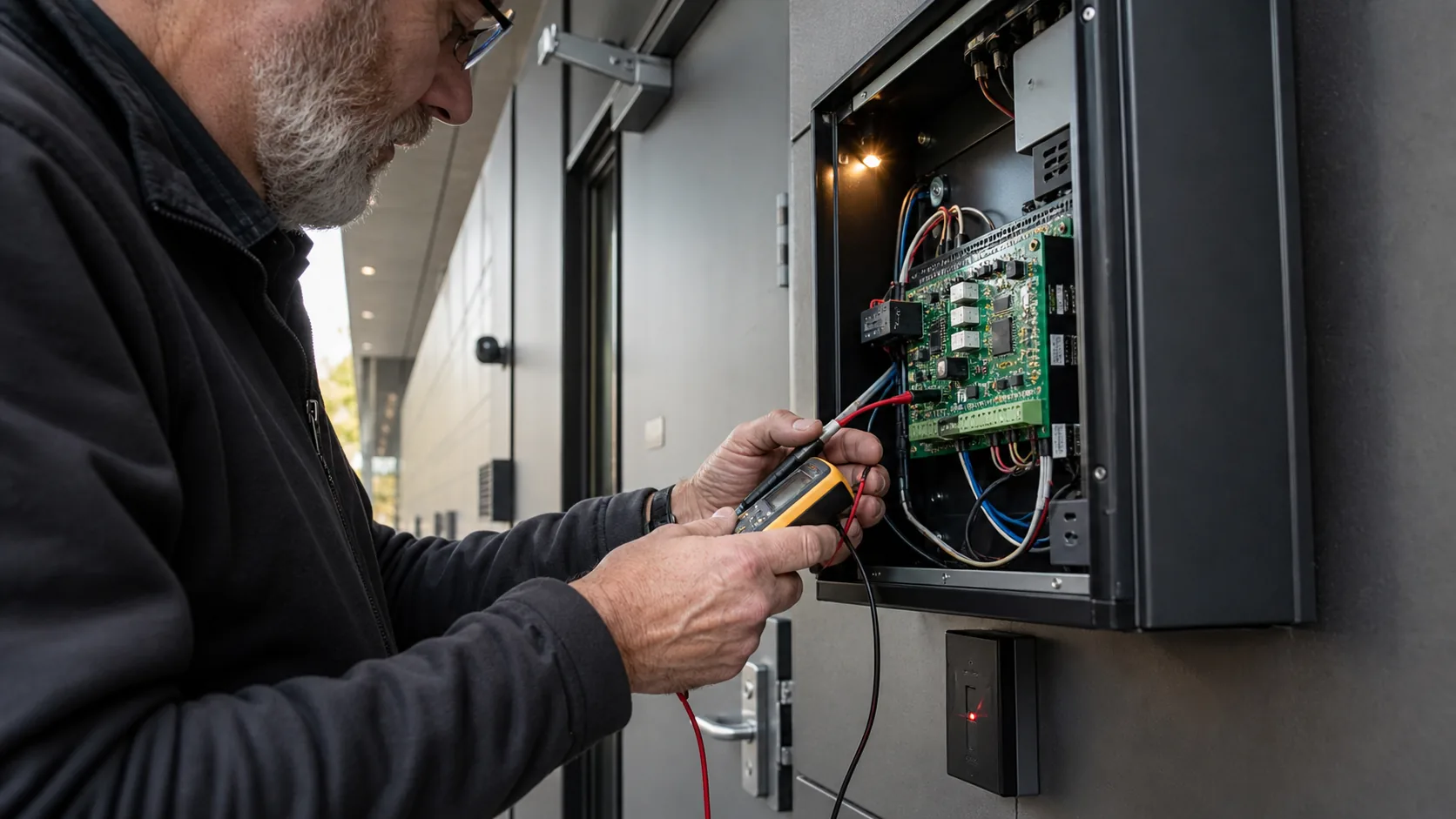
Commercial fire alarm technician working at a life-safety control cabinet
For fire and security service operations

Stop rebuilding the job from five different places.

Service Spine pulls together the service history, open issues, agreement terms and account notes the person handling the job would otherwise have to hunt down before deciding what happens next.

Repeat panel trouble, with the relevant history ready before dispatch.
See where the recommendation came from.Nothing changes until the required person approves it.You don’t have to replace the systems you already use.
The problem

The company already knows. The person handling the job still has to hunt it down.

The service history is in one place. The inspection is somewhere else. An open panel issue may be buried in an old ticket, while the agreement and account notes live in two more systems.

Somebody has to piece the story back together before deciding what should happen next. When something gets missed, the cost often appears later as another truck roll, a slow quote, unbilled work or customer follow-up that never happened.

Job comes inHunt through systemsPiece together the historyDecide what happens next
One service call

SD-214 failed. Before replacing it, check what else the company already knows.

Illustrative example · Synthetic data
ServiceSpineService call briefJEFFERSON MEDICAL PLAZA
Recommended next step

What should happen after this finding?

Service Spine recommendation

Rule out the open Fire Panel 2 issue first. If it is unrelated, prepare a detector replacement under the active agreement.

Waiting for review
Source recordINS-260812

SD-214 failed functional test

Used in this recommendation

How we’d know whether it worked

Time from finding to decisionTime from finding to quoteDeficiencies left unresolvedOffice time spent rebuilding the history

We pick the numbers before the project starts so we can tell whether Service Spine actually helped.

What happens when a job comes in

Service Spine checks the account before the tech or coordinator has to hunt everything down.

It can flag related service history, open issues, agreement terms and customer commitments, then recommend or draft what should happen next. The person reviewing the job sees the records behind that recommendation.

Jefferson Medical PlazaRepeat panel troubleApproval required
Job opensRepeat trouble at Jefferson Medical Plaza

The current call is tied to the site, equipment and account.

Service Spine AI agents checkThis
service call
Service historyOpen issuesAgreement
What Service Spine is allowed to doRecommend the next step or draft the update.

Nothing is written back until the required person approves it. Every recommendation shows where it came from.

You don’t need a company-wide systems overhaul to start.For the first problem, connect only the records Service Spine actually needs.
  • CRM
  • Monitoring
  • Field service
  • Inspection
  • ERP
  • Documents
  • Email + messages
Three places to start

Start with a problem your team deals with every week.

Pick one where missing context creates a return visit, delays a quote, loses billable work or leaves somebody chasing information after the job should have been finished.

Fire and security operations staff reviewing an inspection finding
After an inspectionSD-214 failed. Before replacing it, check what else the company already knows.

Deficiency to Quote

What happened
A smoke detector fails its functional test.
Service Spine checks
The related service history, equipment history, open panel issue and agreement terms.
Who reviews it
A service coordinator reviews the recommendation and releases the quote.
How to measure it
Time from deficiency to quote
Talk through this problem
A first project

Don’t start with an AI transformation. Start with one expensive problem.

Run Service Spine alongside the way the team works today. Decide in advance what should improve and compare the results. If it works, expand from there. If it doesn’t, stop.

Talk through one real problem
  1. Pick the problem

    Start with something that happens repeatedly and has a visible cost in time, money or customer follow-up.

  2. Connect the records

    Use only the systems, history and company knowledge needed for that problem.

  3. Run it with the team

    Use Service Spine beside the way the team handles the job today.

  4. Measure the difference

    Look at the numbers chosen beforehand and decide whether the improvement is worth expanding.

Service Spine doesn’t get a blank check.

Decide what it can read, what it can recommend or draft, and what requires approval before anything changes in another system.

  • Limit it to the records it actually needs.
  • Every recommendation shows where it came from.
  • Define exactly what requires approval.
See how access and approvals work

Who built Service Spine

Jeff Schatten, PhD

Jeff focuses on which service problems are worth using AI for, how people should work with it and how to tell whether it is improving the business. His work on AI and organizations includes research, advising and speaking with companies in the fire and security industry.

Matt Alonso

Matt leads the technical side of Service Spine and has more than two decades of experience building production software and data systems.

More about the founders
Commercial security technician working at an access-control cabinet

Show us one service problem that keeps happening.

If your team repeatedly hunts for the same account history, misses billable work or chases open issues after a ticket closes, start there. We’ll tell you what Service Spine would need to see, what it could realistically do and how we’d measure whether it helped.

Talk through one real problem